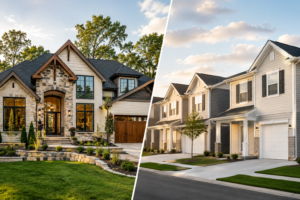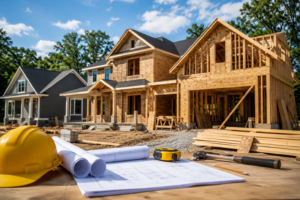

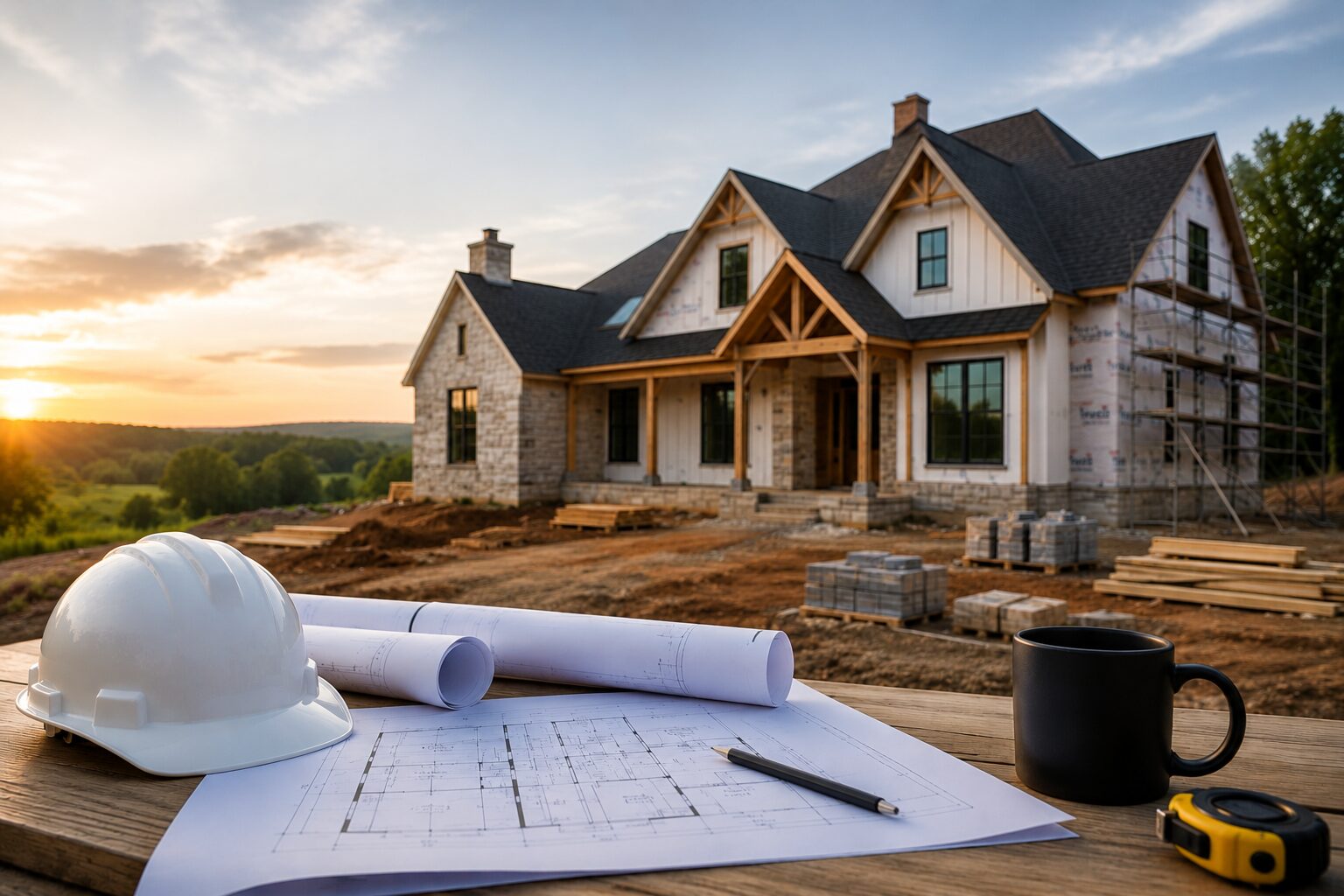
Building a custom home is one of the most exciting investments you'll ever make. Unlike purchasing an existing home or selecting a production builder's floor plan, a custom home gives you complete control over your home's design, layout, finishes, and functionality. Every room is tailored to your lifestyle, allowing you to create a space that truly feels like home.
One of the first questions homeowners ask is: "How much does it cost to build a custom home?"
The honest answer is that every project is unique. Construction costs vary depending on the home's size, location, level of customization, material selections, site conditions, and overall complexity. While it's natural to focus on the final price, understanding what drives those costs is far more valuable when planning your project.
At Ridge Contracting Inc., we help homeowners throughout Salisbury, Mooresville, Concord, Rowan County, and surrounding North Carolina communities navigate every step of the custom home building process. Our goal is to provide exceptional craftsmanship, transparent communication, and realistic expectations from the first consultation through the final walkthrough.
In this guide, we'll explain the biggest factors affecting custom home construction costs, common expenses homeowners should anticipate, and practical ways to maximize your investment while building a home you'll enjoy for decades.
There is no universal price for building a custom home.
While online articles often provide national averages or estimated costs per square foot, those numbers rarely reflect the specific conditions of your property, local labor markets, or the level of customization you want.
Instead of asking, "What is the average price?" it's more helpful to ask, "What factors determine the final investment?"
Every custom home is different because every homeowner has different priorities.
Some clients prioritize expansive kitchens with professional-grade appliances, while others invest in outdoor living spaces, energy-efficient systems, luxury bathrooms, or oversized garages. Those choices naturally influence the overall project budget.
Custom homes also include planning and design considerations that simply don't exist with many production builders. Every decision, from window placement to ceiling height, is intentionally selected to meet your family's needs rather than fitting into a predetermined floor plan.
Because of this flexibility, custom homes typically provide greater long-term satisfaction and value while offering significantly more personalization.
Many homeowners begin researching construction costs by searching for "custom home builder price per square foot."
Although price per square foot can provide a helpful starting point, it should never be the only number used to compare builders.
Two homes with identical square footage can have dramatically different construction costs depending on features such as:
For example, a thoughtfully designed 2,500-square-foot custom home with premium finishes may require considerably more craftsmanship than a larger home built using standard materials.
Rather than focusing solely on square footage, experienced builders evaluate the entire scope of work before preparing an accurate estimate.
Every construction project is influenced by dozens of individual decisions, but several factors consistently have the greatest impact on the overall budget.
Before construction begins, the land must be properly evaluated and prepared.
Site conditions often determine how much work is required before the first foundation is poured.
Potential considerations include:
A flat lot with existing utilities is typically less expensive to prepare than a heavily wooded property requiring significant excavation or grading.
Because every property is unique, a professional site evaluation is one of the most important early steps in the planning process.
Naturally, larger homes generally require more labor and materials.
However, complexity often influences cost even more than square footage.
For example, features such as:
all require additional planning and craftsmanship.
Simple, efficient floor plans often deliver outstanding functionality while helping homeowners maximize their investment.
The foundation supports every other component of your home.
Depending on the property, builders may recommend:
Foundation design depends on soil conditions, grading requirements, drainage, and the overall architectural plan.
Proper planning during this phase helps protect your home for decades to come.
Framing forms the structural skeleton of your home.
Quality framing ensures:
Factors affecting framing costs include:
Because framing influences nearly every trade that follows, precision during this stage is essential.
The materials you choose for the exterior of your home affect both appearance and maintenance requirements.
Popular options include:
Higher-quality materials often require a larger upfront investment but may provide better durability and lower maintenance over time.
Selecting materials that complement the local climate can also improve long-term performance.
Once construction begins, interior finishes become one of the largest variables in the overall project cost.
Nearly every room offers opportunities for customization.
One of the greatest advantages of building a custom home is deciding where to invest based on your family's priorities.
Some homeowners prefer to create a luxury kitchen as the centerpiece of the home, while others prioritize outdoor entertaining spaces, home offices, or spacious primary suites.
Working with an experienced builder allows you to balance these priorities while maintaining a realistic budget.
One of the most effective ways to control construction costs isn't finding cheaper materials. It's making thoughtful decisions before construction begins.
Careful planning helps reduce:
During the planning phase, homeowners should think carefully about:
Investing time in planning almost always leads to a smoother construction experience.
While construction cost is an important consideration, choosing the right builder involves much more than selecting the lowest estimate.
Communication, craftsmanship, scheduling, project management, and attention to detail all play a significant role in the overall experience and in the quality of the finished home.
When planning a custom home, it is important to think beyond the basic construction estimate. Some expenses are easy to overlook during the early planning stages, but they can still affect the total project budget.
Common hidden or overlooked costs may include:
These items do not mean your project is unaffordable. They simply need to be discussed early so your budget reflects the full scope of the home you want to build.
Financing a custom home is different from purchasing an existing home. Many homeowners use a construction loan, which is designed to fund the building process in stages as work is completed.
Because lending requirements can vary, it is helpful to speak with a qualified lender early in the process. A lender can explain available loan options, down payment requirements, draw schedules, and how construction financing may convert into a traditional mortgage after the home is complete.
For general guidance on home loans and financing, homeowners can also review resources from the Consumer Financial Protection Bureau.
The best way to stay on budget is to make important decisions before construction begins. The more clearly your plans, selections, and priorities are defined upfront, the easier it is to avoid unexpected changes later.
Helpful budgeting tips include:
A well-planned custom home does not happen by accident. It requires thoughtful preparation, clear communication, and a builder who understands how each decision affects the final result.
Production homes are usually built from a limited set of floor plans with fewer customization options. They can be a good fit for some buyers, especially when speed and predictable pricing are the top priorities.
A custom home offers a different experience. Instead of adapting your lifestyle to an existing plan, the home is designed around how you want to live. That may include a larger kitchen, dedicated home office, custom storage, expanded outdoor living, a specific architectural style, or a layout designed for long-term comfort.
While a custom home may require more planning, it gives homeowners greater control over the design, materials, layout, and overall feel of the finished home.
The builder you choose has a major impact on your construction experience. A strong builder does more than coordinate labor and materials. They help manage expectations, communicate clearly, solve problems, and protect the quality of the finished home.
When comparing custom home builders, consider:
The lowest estimate is not always the best value. A well-built home should be constructed with care, durable materials, and a long-term mindset.
Ridge Contracting Inc. works with homeowners who want a more personal, detail-focused construction experience. From custom homes and residential construction to renovations, additions, and outdoor living spaces, our team is committed to quality craftsmanship and dependable communication.
We proudly serve homeowners throughout Salisbury, Mooresville, Concord, Rowan County, and surrounding North Carolina communities. Whether you are just beginning to explore ideas or are ready to take the next step, our goal is to help you make informed decisions and move forward with confidence.
To learn more about our work, visit the Ridge Contracting Inc. homepage.
The cost depends on the size of the home, design complexity, materials, site conditions, and level of customization. The best way to get an accurate estimate is to speak with a builder after discussing your goals, property, and desired features.
Price per square foot can be useful as a rough starting point, but it does not tell the full story. Two homes with the same square footage can have very different costs depending on finishes, layout, rooflines, foundation needs, and site preparation.
Major cost drivers often include site preparation, foundation work, framing, exterior materials, mechanical systems, kitchens, bathrooms, and interior finishes. The most expensive areas vary depending on the design and selections.
Yes, many homeowners build custom homes on land they already own. Before construction begins, the property should be evaluated for access, utilities, grading, drainage, soil conditions, and any local permitting requirements.
Timeline depends on the home size, design complexity, permitting, weather, material availability, and site conditions. Planning and selections made early can help reduce delays once construction begins.
Start with clear priorities, make selections early, allow room for unexpected expenses, and communicate regularly with your builder. Avoiding major changes after construction begins is one of the best ways to control costs.
For many homeowners, a custom home is worth the investment because it is designed around their lifestyle, preferences, and long-term needs. The value comes from personalization, functionality, quality construction, and long-term satisfaction.
Yes. Ridge Contracting Inc. serves homeowners in Salisbury, Mooresville, Concord, Rowan County, and surrounding North Carolina communities with custom home building, residential construction, renovations, additions, and outdoor living projects.
Building a custom home starts with the right conversation. Whether you are comparing options, evaluating land, thinking through design ideas, or preparing to move forward with construction, Ridge Contracting Inc. can help guide the process.
If you are ready to build a home designed around your vision, lifestyle, and future, contact Ridge Contracting Inc. today to schedule a consultation.